

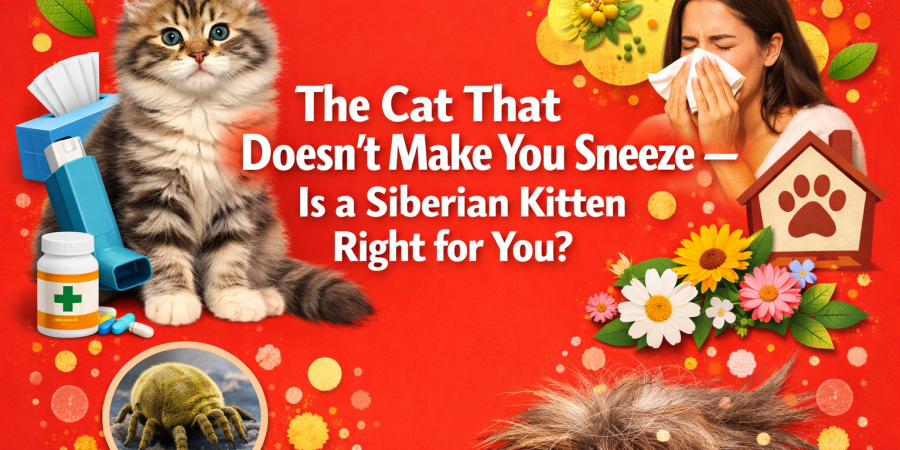
The Cat That Doesn’t Make You Sneeze — Is a Siberian Kitten Right for You?
Siberian Cat — Breed at a Glance
Browse Siberian Kittens for Sale Near You
Real listings from private sellers and breeders across all 50 states. Free to browse, no account needed.
What Is a Siberian Cat?
The Siberian is one of the oldest naturally occurring cat breeds in the world, with documented records in Russian folklore, rural lore, and artwork dating back to the 10th century. Russia’s national cat, it developed over centuries in the dense forests and brutal winters of Siberia, producing a large, powerfully built, triple-coated cat that is as athletic and intelligent as it is affectionate.
The breed was first imported to the USA in 1990, when breeder Elizabeth Terrell brought three Siberians from Russia to Louisiana. From those early imports, the American Siberian breeding community has grown steadily. Today the breed is recognized by both TICA and the CFA and has developed a loyal following — particularly among allergy sufferers drawn by its documented lower Fel d 1 protein levels.
What most people do not expect from a Siberian is the personality. These are not quiet lap cats — they are confident, curious, problem-solving companions who follow their owners throughout the house, chirp and trill to communicate, and have been known to turn on faucets, open cabinet doors, and develop a genuine fascination with water. Males in particular are nurturing and playful well into adulthood. This breed is widely described as the closest thing to a dog in the cat world.
The Allergy Question — What the Science Actually Says
This breed’s reputation as a “hypoallergenic” cat is the single most misunderstood aspect of the breed. Here is what the research actually shows — and what you genuinely need to know before buying a kitten based on allergy hopes.
Understanding Fel d 1 Levels
| Factor | Effect on Fel d 1 Levels | What It Means for Buyers |
|---|---|---|
| Sex of cat | Females produce lower Fel d 1 than males on average. Neutered males drop significantly after surgery. | Allergy sufferers should prioritize females or neutered males |
| Coat color | Silver-coated Siberians tend to test higher than other colors | Allergy sufferers may want to avoid silver/chinchilla coat varieties |
| Individual genetics | Levels are cat-specific — littermates can test very differently | Ask for the test result of the specific kitten or its parents — not the breed average |
| Stress and environment | Fel d 1 production fluctuates with stress levels and seasonal changes | A cat that tests low in a cattery may test differently in a new home initially |
| Secondary allergens | Some people are allergic to albumin or lipocalin — not Fel d 1 | If you are allergic to horses or rabbits, a low-Fel d 1 Siberian may still cause reactions |
Traditional Siberian vs Neva Masquerade — What Is the Difference?
There are two main varieties of this breed — the traditional (non-pointed) and the Neva Masquerade (pointed). Both are recognized within the Siberian breed standard by TICA and CFA. Both share identical temperament, body type, and triple-coat structure. The difference is coat pattern and eye color.
| Feature | Traditional Siberian | Neva Masquerade |
|---|---|---|
| Coat pattern | Any color or pattern — tabby, solid, tortoiseshell, bicolor, silver | Pointed — darker color on face, ears, paws, and tail against a lighter body |
| Eye color | Gold, green, or odd-eyed | Always blue — vivid sapphire blue is the most prized |
| Most common colors | Brown tabby (most common), black, white, blue tabby, silver tabby | Seal point, blue point, red (flame) point, cream point, tortie point |
| Rarity in USA | More common — larger breeding population | Rarer — fewer breeders. Many Neva Masquerade lines are directly imported from Russia. |
| Price in USA 2026 | $1,200 – $3,000 | $2,000 – $4,500+ |
| Allergen note | Silver varieties tend to test higher for Fel d 1 | Some specialist breeders test Neva Masquerades and report very low Fel d 1 in blue-eyed lines |
Kitten Price Guide — How Much Does a Siberian Cost in 2026?
Siberian kittens are among the more expensive cat breeds in the USA, reflecting genuine scarcity combined with the significant health testing investment that reputable breeders make. Whether you are searching for Siberian kittens for sale near me in California, Texas, or Virginia, understanding what drives pricing helps you identify fair deals and avoid scams.
| Kitten Type | Price Range (USD) | Typical Inclusions | Best For |
|---|---|---|---|
| Rescue / Shelter Adoption | $75 – $400 | Basic vaccinations, spay/neuter | Budget buyers — rare to find purebred in shelters |
| Private Seller | $600 – $1,400 | Vaccinations, vet check. Papers may vary. | Buyers comfortable without full registration documents |
| TICA/CFA Breeder — Pet Quality | $1,200 – $2,500 | Registration papers, health testing, vaccinations, contract | Buyers wanting verified pedigree and health screening |
| Fel d 1 Tested — Low Allergen | $2,000 – $4,000 | All of the above plus lab-verified Fel d 1 results for parents | Allergy sufferers who need documented low allergen levels |
| Neva Masquerade | $2,000 – $4,500+ | Full registration, often Russian import bloodlines, allergen testing | Buyers wanting the pointed coat and blue eyes |
| Show Quality | $3,000 – $5,000+ | Champion bloodlines, full breeding rights documentation | Show competitors and breeding program founders |
Price by State
| Region | Typical Price Range | Notes |
|---|---|---|
| California, New York, Washington | $2,000 – $4,500+ | Highest demand, fewest local breeders — often requires flight nanny delivery |
| Virginia, Colorado, Georgia | $1,900 – $3,200 | Several established catteries including Russian import programs |
| Midwest and New England | $1,200 – $2,800 | Wider range — mix of established breeders and smaller programs |
| Rural and Mountain States | $1,000 – $2,200 | Fewer breeders overall — may require longer wait lists |
| Flight nanny delivery | Add $400 – $700 | Standard delivery method for this breed given limited local availability |
Temperament — Why Owners Call Them the Dog of the Cat World
These cats are frequently described by owners as the most dog-like cat breed available. This is not just about affection — it is about active engagement, problem-solving, and genuine interest in what their humans are doing at all times. If you are searching for Siberian kittens for sale near me and want a genuinely interactive companion rather than a decorative lap cat, this breed delivers that in full.
| Trait | Rating | What It Means for You |
|---|---|---|
| Affection Level | Very High | Bonds deeply with family. Greets owners at the door. Follows room to room. |
| Playfulness | Very High | Remains playful well into adulthood. Needs daily active play. Will invent games if bored. |
| Intelligence | Very High | One of the most problem-solving cat breeds. Will open doors, turn on taps, and figure out puzzles. |
| Vocalization | Medium | Communicates with a repertoire of chirps, trills, and quiet meows — not yowling. Conversational. |
| Child-Friendly | Very High | Confident and tolerant with children. Enjoys interactive play rather than just sitting still. |
| Dog-Friendly | Very High | One of the most dog-compatible cat breeds. Often becomes best friends with household dogs. |
| Independence | Medium | Not clingy but strongly social. Benefits from a companion animal if owners work long hours. |
| Water Fascination | High | Many Siberians are drawn to water — running taps, fountains, and even baths. Unusual for cats. |
One important consideration: the Siberian’s intelligence means it needs genuine mental stimulation. A bored cat will create its own entertainment — which may include reorganising your kitchen surfaces, investigating inside appliances, or discovering that the toilet is fascinating. Puzzle feeders, tall cat trees, and interactive wand toys are not optional for this breed — they are essential.
Health — Why This Is One of the Healthiest Pedigree Breeds You Can Buy
This is one of the healthiest pedigree cat breeds available, which is a meaningful distinction in a world where many popular breeds carry serious genetic health burdens. The breed’s high genetic diversity — comparable to random-bred cats — is a direct result of its ancient natural landrace origin rather than selective human breeding for extreme physical traits.
| Health Condition | Risk in Siberians | What to Ask Your Breeder |
|---|---|---|
| Hypertrophic Cardiomyopathy (HCM) | Low to moderate — present in the breed but not at elevated rates compared to other pedigree cats | Have both parents had HCM cardiac screening? Ask for the echocardiogram report. |
| Polycystic Kidney Disease (PKD) | Low in traditional Siberians. Some concern in Neva Masquerade lines — a precautionary measure given historical crossbreeding with other breeds in early development. Not definitively established but reputable breeders test regardless. | Has PKD DNA testing been done on both parents? Especially important for Neva Masquerades. |
| Progressive Retinal Atrophy (PRA) | Low — being screened for increasingly by reputable breeders in 2026 | Has PRA genetic testing been conducted? This is becoming standard at better catteries. |
| Obesity | Moderate — large body size and high food motivation make weight management important | Ask for feeding guidelines. Measure portions — do not free-feed. |
| Dental Disease | Common in all cats — routine dental care from kittenhood prevents most issues | Ask about the breeder’s dental care routine. Start toothbrushing from week one at home. |
| Injury | The most common cause of morbidity in the breed — a direct result of their athleticism and fearlessness | Kitten-proof the home thoroughly. Secure high shelves, balconies, and appliances before collection day. |
Care Guide — Grooming, Feeding, and Keeping Them Happy
Grooming
Despite the impressive triple coat, this breed is lower-maintenance than its appearance suggests. The coat has a natural water-repellent quality and does not mat readily under normal conditions. Brushing twice per week is sufficient for most of the year. During the two annual shedding seasons — spring and autumn — daily brushing for 3 to 4 weeks prevents matting and dramatically reduces the amount of fur deposited around the home. A steel comb or slicker brush works best for penetrating all three coat layers. These cats shed their heavy winter coat in spring, triggered by changing daylight hours rather than temperature — so indoor cats in artificially lit homes may shed more unpredictably than outdoor cats.
Diet and Feeding
Feed measured meals two to three times daily using a high-quality protein-rich food appropriate for the cat’s life stage. Given the breed’s large eventual size and slow maturation, kitten-formula food should be maintained until at least 18 months — some breeders recommend extending to 24 months. A wide, shallow bowl prevents whisker fatigue. A running water fountain significantly increases water intake, which supports kidney health. Do not free-feed — their large appetite and size make portion control important for long-term joint health.
Exercise and Enrichment
This breed needs at least 20 to 30 minutes of active play daily — more than most cat breeds. Wand toys, feather teasers, ball tracks, and treat puzzles all satisfy their hunting instinct and problem-solving drive. A tall, sturdy cat tree is essential — this breed is an enthusiastic climber and will reach the highest point in any room. If you cannot provide consistent daily engagement, consider adopting two together. The breed thrives with a companion and is one of the few cats that genuinely benefits from having another cat to play with.
What to Look for When Buying a Siberian Kitten
| Question to Ask | Why It Matters | Good Answer |
|---|---|---|
| Is the kitten TICA or CFA registered? | Confirms genuine Siberian lineage | Yes — registration number verifiable at tica.org or cfa.org |
| Have the parents been Fel d 1 tested? (if buying for allergy reasons) | The only reliable allergen indicator — breed average is not sufficient | Yes — lab report from Indoor Biotechnologies or InBio provided for both parents |
| Have both parents had HCM cardiac screening? | Reduces cardiac disease risk | Yes — echocardiogram report available |
| Have both parents been PKD tested? | Especially important for Neva Masquerade lines | Yes — PKD DNA negative certificates for both parents |
| What is the kitten’s current Fel d 1 level? (allergy buyers) | Individual kitten levels matter more than parent levels | Saliva test result in mcg/mL provided from a certified lab |
| Is the kitten at least 12 weeks old? | Slow-maturing breed — 14 to 16 weeks is better | Yes — birth date confirmed in vet records |
| Has the kitten been vaccinated and dewormed? | Basic health protection | FVRCP series, vet health certificate provided |
| Can I visit or do a live video call before purchase? | Confirms kitten exists and matches listing | Yes — breeder welcomes in-person visits or live video at any time |
Find Siberian Kittens for Sale Near You
SVNLPets.com lists Siberian kittens from private owners and breeders across all 50 states. Browse by location, filter by price, and contact sellers directly.
How the Siberian Compares to Maine Coon, Norwegian Forest Cat, and Ragdoll
Buyers drawn to this breed often compare it to other large, long-haired breeds. Here is how it stacks up against the three most common alternatives.
| Feature | Siberian | Maine Coon | Norwegian Forest Cat | Ragdoll |
|---|---|---|---|---|
| Weight | 8 – 17 lbs | 12 – 25 lbs | 9 – 16 lbs | 10 – 20 lbs |
| Lifespan | 10 – 18 years | 12 – 15 years | 14 – 16 years | 12 – 17 years |
| Low Allergen | Yes — lower Fel d 1 in ~50% of cats | No | No | No |
| Energy Level | High — athletic and playful | High | High | Low to Medium |
| Dog-Friendly | Very High | Very High | High | High |
| Grooming Need | Medium — twice weekly, heavy during shedding | Medium to High | Medium — coat does not mat easily | Low to Medium |
| Main Health Risk | HCM (low risk), injury from athleticism | HCM, spinal muscular atrophy | HCM, glycogen storage disease | HCM, urinary tract disease |
| Avg. Price USA 2026 | $1,200 – $4,000 | $1,000 – $3,500 | $800 – $2,000 | $800 – $3,500 |
| Best For | Allergy sufferers, active households, dog owners | Active families wanting the largest cat breed | Buyers wanting lower-maintenance long coat, calmer temperament | First-time owners, families, apartment living |
Also on SVNLPets.com: Ragdoll Kittens for Sale | Munchkin Kittens for Sale | Scottish Fold Kittens for Sale
First Year Cost Breakdown — What to Budget Beyond the Purchase Price
| Expense | One-Time or Recurring | Estimated Cost (USD) | Notes |
|---|---|---|---|
| Kitten purchase price | One-time | $1,200 – $4,000 | Higher end for Fel d 1 tested or Neva Masquerade |
| Initial vet visit | One-time | $100 – $250 | Within 72 hours of collection |
| Spay / neuter | One-time | $200 – $500 | Often included by reputable breeders |
| Vaccinations (first year) | One-time series | $100 – $200 | FVRCP + rabies — often partially included by breeder |
| Food | Monthly | $40 – $100/month | High-protein formula. Kitten food until 18–24 months. Measure portions carefully. |
| Litter box + litter | One-time + monthly | $50 – $100 setup; $25 – $50/month | Large box essential — this is a large breed |
| Tall cat tree | One-time | $80 – $250 | Must be sturdy enough for an adult Siberian — cheap trees tip over |
| Toys and enrichment | Ongoing | $50 – $150/year | Wand toys, puzzle feeders, ball tracks. This breed needs stimulation. |
| Water fountain | One-time | $30 – $80 | Strongly recommended — increases water intake and supports kidney health |
| Pet insurance | Monthly | $25 – $60/month | Recommended — particularly important given the breed’s athleticism and injury risk |
| Annual wellness vet visit | Annual | $150 – $300 | Include HCM cardiac check from age 2 onwards |
| Grooming tools | One-time | $25 – $60 | Steel comb + slicker brush. Heavy use needed during shedding seasons. |
Siberian Kittens — Frequently Asked Questions
SVNLPets.com is a free USA pet classifieds platform connecting private sellers and buyers of Siberian kittens across all 50 states. Information in this guide is intended for general educational purposes. Always verify health documentation directly with sellers and consult a licensed veterinarian before purchasing any kitten. Allergy data referenced from Siberian Research Inc, Indoor Biotechnologies, Lundberg Siberians, and peer-reviewed allergen studies. Breed data referenced from TICA, CFA, PetMD, and ASPCA. Content updated April 2026.
Leave a Reply